Reflections from outgoing ISAPP board member, Prof. Seppo Salminen


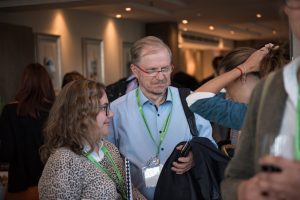
At the ISAPP 2026 meeting in Tokyo, the Board of Directors said farewell to longtime board member and past President, Prof. Seppo Salminen PhD as he retired from his board position.
Prof. Salminen, one of the world’s most highly cited probiotic researchers, recalls first being invited to give a talk at the ISAPP Barcelona meeting in 2010. He then joined the board in 2012, and since that time, has been an important voice leading or contributing to many ISAPP activities. Prof. Salminen participated in three of ISAPP’s scientific consensus definition panels: probiotics, prebiotics and postbiotics.
ISAPP connected with Prof. Salminen as he stepped down from his board position, asking him to reflect on his years as part of the ISAPP community and Board of Directors.
What was your impression of ISAPP at the first meeting you attended?
The meeting was really fantastic in terms of science, and in terms of getting to know people. Everybody was very friendly, and it was an inspiring environment.
How did your background in regulation prove useful for the work you did with ISAPP?
At the same time as I was working at the University [of Turku] I was working as an external expert at the European Food Safety Authority (EFSA), focusing on novel foods and nutrition and allergies. And for me, it was a very interesting time, because I was enrolled as an expert in the first meeting when EFSA had just been established. Many of the procedures we developed there and used later on became standards in ISAPP work.
In your time as ISAPP’s President, what were your goals for the organization?
There were a couple of things. One was to have a more global approach to ISAPP and to the board members, and I think that proved to be successful, because that’s when Gabriel Vinderola [from Argentina] joined the Board of Directors. I think he has been very helpful in many ways, and especially being a Spanish-speaking person in South America. So I wanted to promote the idea that we would be truly global.
The second idea that I tried to carry all through my time on the ISAPP board was to focus on the definitions. Because the definitions are needed for so many things. We need them for regulatory purposes, for evaluating science. All of them are published in Nature Reviews Gastroenterology & Hepatology in the same format. I think this is really something that ISAPP has brought to the world.
What were the challenges during your time as ISAPP President?
Of course, nobody imagined that during that period we would have COVID. We were supposed to have a meeting in Banff and everything was prepared. Then all of a sudden, in March, the travel restrictions started and it was quite tough. We tried to figure out our best option. We had to quickly organize the meeting online, and it was quite an effort. I think we had one month’s time to organize everything. Yet we had a very successful meeting online as well.
What were some of the most memorable ISAPP meetings from over the years?
Quite fantastic was the meeting organized with the New York Academy of Sciences. The conference was held in the building next to the construction of the ‘Freedom Tower’. It was a fantastic place to have a meeting, and very interesting social activities in New York.
In Berkeley, we had the conference dinner on the top of a mountain, and the bus got stuck. We had to push. In the end it was fun, even though [our Executive Science Officer] Mary Ellen thought that it was a grand fiasco.
What do you see as ISAPP’s greatest strength, going forward?
One of ISAPP’s greatest strengths is always focusing on science first, and then looking at the next steps: how it applies to consumers, or regulators or industry members.
The other strength is that we have the student body, which is raising awareness of the field in other groups and letting them know about the science that ISAPP represents. The student members are the future leaders, hopefully.
What is your wish for ISAPP in the future?
I noticed that in the field over the years, there have been a lot of cases where there’s a disconnect between the science and the regulation, and the communication seems difficult between the groups.
I think we should promote the science in such a way that it’s also applicable to regulatory people, and then it influences us – you and me as consumers – and our colleagues as scientists or industry people. Everybody benefits if we have a common definition.
So I would like to see even more definitions. Perhaps definitions for different ways in which microbiota interact with our health. Not only probiotics and prebiotics, but also, let’s say, live microbes as novel foods.
Ultimately, what has ISAPP meant to you?
We work with the people who are among the best in their science and it’s always fruitful to have those discussions, especially at the annual meetings where we have the person-to-person discussions. This helps us share our own ideas, but it also gives us the opportunity to challenge (and be challenged by) other members. And it has always been good, collaborative discussion that develops our science further. And perhaps gives us new ideas as well, because the Board is so multidisciplinary.
And some of the Board members have become personal friends. That’s also an important part of what ISAPP does: produce an environment where people like to work together, to develop and harmonize things together.
*
At the ISAPP meeting gala dinner in Tokyo, Prof. Salminen was presented with a plaque from the Board of Directors, which read:
Thank you for your abiding dedication to ISAPP. Your insight, generosity, collaboration, and stewardship have left a lasting mark on the biotics field.