Fermented Foods

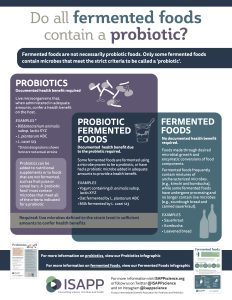
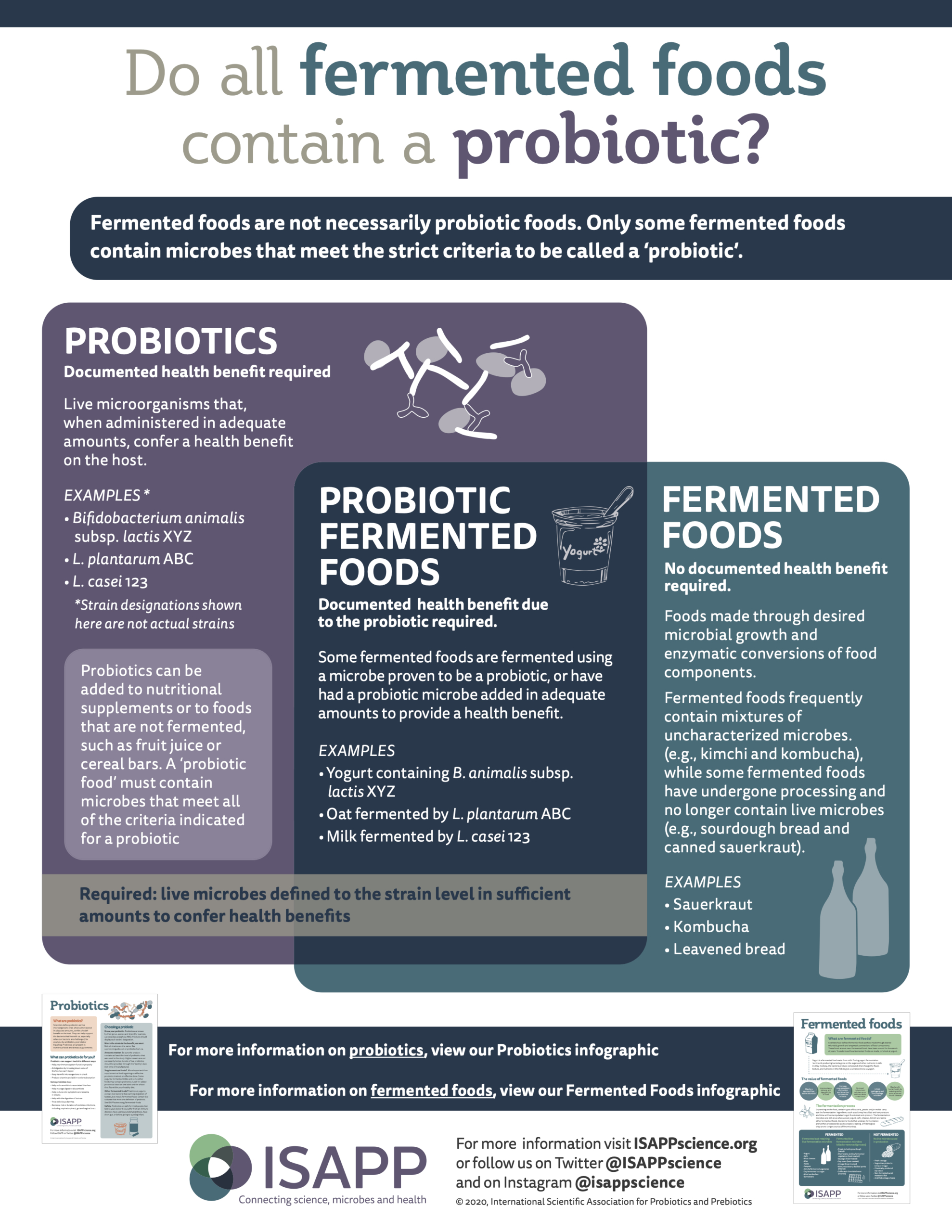
Not all fermented foods contain probiotics.

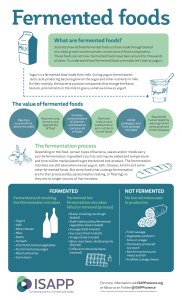
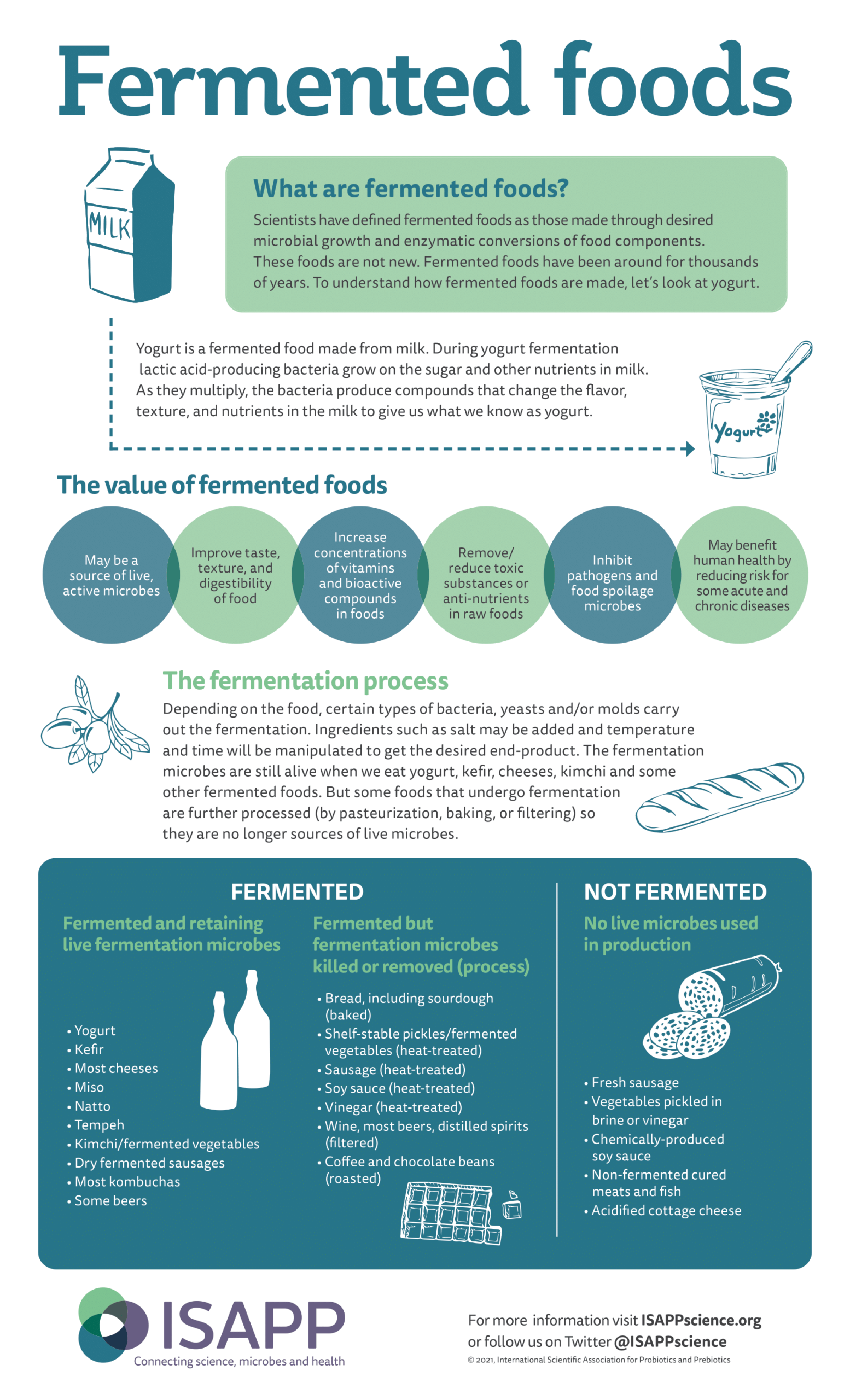
Fermented foods are foods made using desirable microorganisms that change the properties of the food components. Throughout human history, fermentation has served as a way to preserve and transform foods, creating more stable and diverse foods with unique tastes and textures.

All fermented foods require microbes for their creation, but not all fermented foods contain live microorganisms at the time of consumption. When they do, the number of microorganisms can vary significantly depending on how products were manufactured and processed, as well as conditions and duration of storage. Fermented foods are generally safe to eat because the fermentation process typically keeps harmful microorganisms at bay.

Few microorganisms in fermented foods meet the criteria for probiotics because they have not been specifically named and tested for health benefits. Instead, microorganisms in fermented foods typically fall under the category of live dietary microbes.

Featured

What’s New

More Resources on Fermented Foods

1-60 of 64 results
  • Archive Highlight: The science of fermented foods, part 1, with Prof. Bob Hutkins

  • Fermented foods: a perspective on their role in delivering biotics

  • Positive health outcomes associated with live microbe intake from foods, including fermented foods, assessed using NHANES database

  • Commentary on: functional food science and gastrointestinal physiology and function

  • A Classification System for Defining and Estimating Dietary Intake of Live Microbes in US Adults and Children

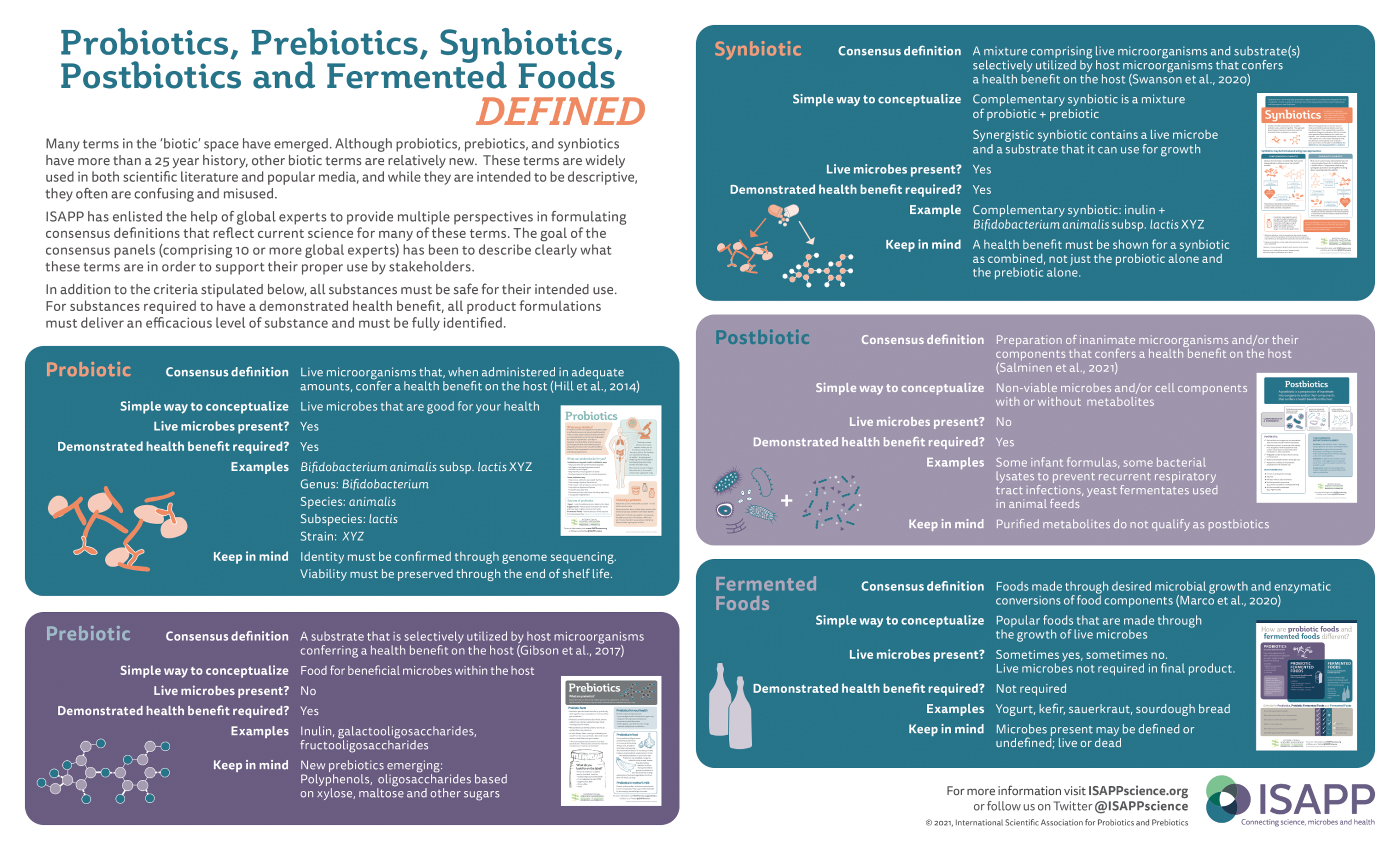
  • Probiotics, Prebiotics, Synbiotics, Postbiotics and Fermented Foods Defined

  • What are fermented foods?

  • Do all fermented foods contain a probiotic?

  • The International Scientific Association for Probiotics and Prebiotics (ISAPP) consensus statement on fermented foods

  • Should There Be a Recommended Daily Intake of Microbes?

  • Fermented foods in a global age: East meets West

  • Fermented foods