Alcohol in fermented foods: Considerations for pregnancy and childhood


The interest in fermented foods seems at an all-time high in modern, industrialized societies, while they remain a significant part of the diet in cultures that have remained close to their traditionsl lifestyle. Across industrialized cultures, one frequent question about fermented foods is whether they are safe for consumption by pregnant women and children.
Since the pandemic, I have been running an Instagram account, where I do science communication – developing from an audience of a few hundred to now more than 180,000 followers. Through this social media channel, I receive many inquiries from people interested in the gut microbiome, probiotics and fermented foods, but the most commonly recurring questions are, by far, related to fermented foods and their alcohol content: I am pregnant, can I drink kefir? And what about kombucha? Can I give kefir to my children?
In Argentina and other countries, the recommendation is not to consume alcohol during pregnancy or during childhood up to the age of 18. Yet some fermented foods contain alcohol. What does the science reveal about resolving this contradiction?
Alcohol in fermented foods
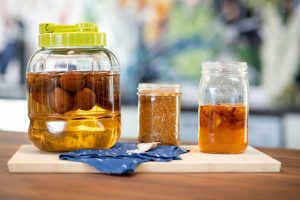
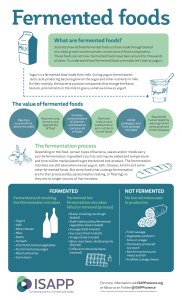
Due to the nature of fermentation, fermented foods may contain variable amounts of alcohol. In the production of cheese and yoghurt, typically only homofermentative lactic acid bacteria cultures are used, which produce very little, if any, alcohol. However, in other fermented foods and beverages, the microbial consortia responsible for the fermentation may include yeasts and/or heterofermentative lactic acid bacteria, which are able to produce variable amounts of ethanol. For example, milk kefir is reported to contain up to around 0.5% of ethanol, and sugary (water) kefir or kombucha may contain up to 3% of alcohol.
Prof. Bob Hutkins PhD, past board member of ISAPP and Professor Emeritus at the Department of Food Science and Technology and Nebraska Food for Health Center in the USA, notes that for any fermented food or beverage, the importance of the starter culture is paramount. Sauerkraut or kimchi may contain very low amounts of alcohol, as the fermentation is dominated by the lactobacilli including heterofermentative lactobacilli and Leuconostoc species.
Further, Prof. Hutkins notes that the alcohol content may vary between traditional and commercial production methods. He says, “Traditional kefirs that are made from grains may certainly contain some ethanol, due to the ethanol-producing yeasts associated with the grains. However, these grain-produced kefirs are rare in commercial markets. Commercial kefirs (at least in the US) are made with defined starter cultures that often do not include any yeast. These products usually contain zero or trace amounts of ethanol.”
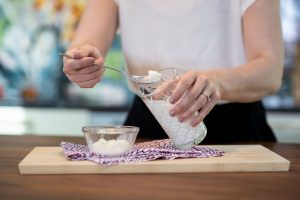
In case of sugary kefir made at home, the amount of alcohol will be proportional to the initial amount of sucrose and the time of fermentation. In fact, a glass of sugary kefir may render one positive to a breath test for alcohol, as we recently reported (1).
Overall effects of fermented foods in pregnancy
Considering fermented foods more broadly, what does the research say about the effects of consumption during pregnancy?
A recent review paper explored the role of fermented foods during pregnancy and its subsequent impact on maternal and infant health, especially in the first 1,000 days of life (2). Fermented foods covered in this review included many fermented foods where yeasts, responsible for alcohol production, are part of the microbial consortia in charge of fermentation.
Some of the health benefits reported by the authors included an association with reduced depressive symptoms during pregnancy, prevention of pregnancy-induced insulin resistance, reduced risk of preterm birth, reduced risk of developmental delay and atopic dermatitis in the offspring, longer sleep duration and lower infection rates, among other positive health outcomes. Possible mechanisms, as noted in the review paper, include modulation of immune cell activity, altered gut microbiota composition associated with anti-inflammatory effects and increased -chain fatty acid production.
Exploring the contradiction: Expert views
On the one hand, fermented foods in general have been associated with health benefits in pregnancy, and many non-industrialized societies have maintained lifestyles that include consuming fermented foods, even during pregnancy. On the other hand, given the alcohol content of some fermented foods and the recommendation for abstinence from alcohol during pregnancy, potential concern exists with their consumption during this period. Should pregnant women focus on fermented foods without any alcohol until more science is available? I asked the opinion of some experts in the field on this topic.
Prof. Seppo Salminen PhD, present board member of ISAPP and Professor at the Faculty of Medicine at the University of Turku in Finland, notes that the amount consumed is key. “The levels of alcohol are absent or very low in most fermented food products, and in many cases the amount each individual eats is so small that there may not be a major risk. However, exceptions can of course occur, and more research is needed.”
The labels of commercial products may also offer valuable guidance on the alcohol content of fermented foods and beverages. Prof. Hutkins notes that kombucha is made from a SCOBY (symbiotic culture of bacteria and yeasts) that will always contain yeasts. He says, “Although the amount of ethanol will vary, there may always be some ethanol present in commercial kombucha. Also, commercial products may be subject to regulations specifying a maximum of 0.5% alcohol content, depending on the jurisdiction.” He notes cases where commercial products exceeded 0.5% and had to be recalled. Homemade kombucha may exceed this level and should be approached with caution by those avoiding alcohol.
Dr. Laxmi Yeruva PhD from The Microbiome and Metabolism Research Unit and the Arkansas Children’s Nutrition Center in the USA, senior author responsible for the review referenced above, says “Future longitudinal and mechanistic studies are needed based on ethnic backgrounds, for consensus on which fermented foods to recommend during pregnancy and to promote optimal child health and development”.
Further research on the effects of fermented foods
Clearly more research is needed, both on the fermented foods themselves and on the health effects of fermented foods on maternal and child health when consumed in pregnancy.
Advancements in manufacturing techniques may be a fruitful area for further development. Prof. Michael Gänzle PhD, from the Department of Agricultural, Food and Nutritional Science of the University of Alberta in Canada says it may be possible to change the fermentation process of certain foods to adjust the level of alcohol. He stated, “During fermentation of kombucha and water kefir, lactic and acetic acid bacteria grow first, yeasts and ethanol come a bit later. It may be possible to mitigate the problem by fermentation control and (refrigerated) storage conditions”.
Further research should also focus on the interplay between the beneficial components of fermented foods (such as live dietary microbes) and the possibly detrimental components (such as alcohol). An issue that has been on my mind for some time is the food matrix effect (3) when it comes to fermented foods and alcohol. Foods are not simply a set of nutrients; each food consists of a unique matrix: the precise combination of physical and chemical factors that make up a food, including carbohydrates, fibers, water, proteins, fats, minerals, etc., in a particular spatial arrangement that may impact functionality. The nutrient and non-nutrient compounds comprising the food matrix, and their structure, can alter the digestion, absorption and bioactivity of food components (such as alcohol) and induce physiological effects different from isolated nutrients. Further, the net positive or negative effect of a food depends not just on one metabolite (e.g. alcohol) but on the interaction of many factors. When it comes to fermented foods, scientists need to know more about potential detrimental effects caused by the amount of alcohol present in fermented foods when contrasted with the health effects delivered by the live and dead microbes and microbial metabolites the food contains.
For now, the safest advice for populations wishing to avoid alcohol consumption is to review labels of fermented foods and beverages, and avoid those with significant or unknown percentages of alcohol (4). Further research on the safety of specific fermented foods that contain low but variable amounts of alcohol for pregnant women and children will certainly shed further light on this matter, and enable more robust evidence-based guidance.
References
(1) Puntillo M, et al. Homemade water kefir: Characterisation and first evidence of an effect on breath alcohol testing. Fermented Foods. 2025;1:100002.
(2) Pandiyan A, et al. The role of fermented foods in maternal health during pregnancy and infant health during the first 1,000 days of life. Frontiers in nutrition. 2025;12:1581723.
(3) Klurfeld DM. The whole food beef matrix is more than the sum of its parts. Critical reviews in food science and nutrition. 2024;64(14): 4523–4531.
(4) Vinderola G & Pérez-Marc G. Fermented foods and probiotics for children. The importance of knowing their microbiological differences. Alimentos fermentados y probióticos en niños. La importancia de conocer sus diferencias microbiológicas. Archivos Argentinos de Pediatria. 2021;119(1): 56–61.